
How to Identify a Deer Mouse in Granite Bay Homes
A deer mouse in Granite Bay looks similar to a house mouse but carries a real health risk. Droppings in a shed, musky odor in a garage, or nesting near stored items are common signs. Identifying a deer mouse in Granite Bay early keeps cleanup safe.
Quick Answer: A deer mouse has a sharply two-toned tail, white feet, and a white belly, and it carries the primary risk of hantavirus among local rodents. Granite Bay sheds, garages, and properties near open space give deer mice easy shelter. Oakline Rodent Solutions inspects these spaces to confirm deer mouse activity and recommend safe cleanup steps. Schedule an inspection before disturbing any suspected droppings.
Call Now For Same Day Inspection
At a Glance
|
Species |
Deer mouse (Peromyscus maniculatus) |
|
Common size |
3–4 inch body, 2–4 inch bicolored tail |
|
Typical habitat |
Sheds, garages, woodpiles, storage buildings near open space |
|
Main risks |
Contaminated insulation, nesting in stored belongings |
|
Health concerns |
Hantavirus (primary carrier species) |
|
Common entry points |
Shed gaps, garage vents, storage building openings |
|
Activity period |
Year-round, higher outdoor activity in warmer months |
What Is a Deer Mouse?
A deer mouse is a small wild rodent that looks similar to a house mouse but carries a different health risk. It is the main carrier of hantavirus among rodents found in California.
Granite Bay properties bordering open space, greenbelts, or larger lots give deer mice easy access to sheds, garages, and outdoor storage buildings. Homes closer to undeveloped land tend to see more activity than those in dense, fully built-out neighborhoods.
Correct identification matters more with this species than most others. The cleanup approach for deer mouse droppings is different from house mouse droppings, because of the hantavirus risk tied specifically to this species
How Can You Identify a Deer Mouse?
A deer mouse has a sharply two-toned tail — dark brown on top, white underneath — which is the fastest way to tell it apart from a house mouse. A house mouse tail stays uniformly gray with no color change.
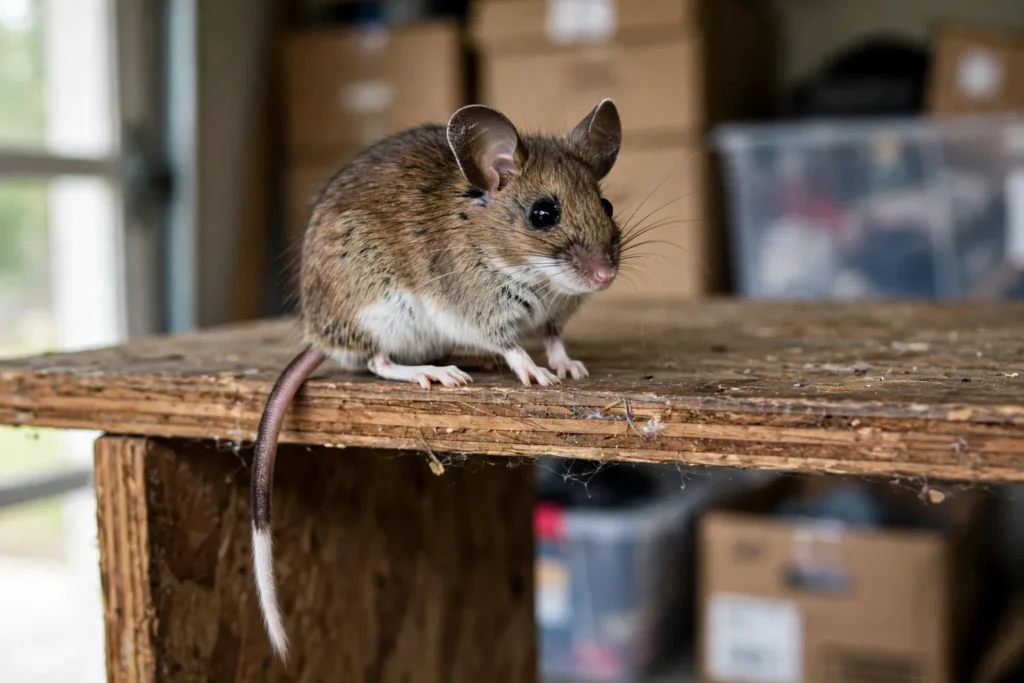
Additional markers include white feet, a distinctly white belly, and large eyes suited to low-light conditions. Adult deer mice run 3 to 4 inches long and weigh about an ounce, slightly lighter than a house mouse. Droppings look almost identical to house mouse droppings — small and rod-shaped with pointed ends. Location is the better clue: deer mice are more likely found in sheds, garages, and storage buildings than in kitchens.
|
Feature |
Deer Mouse |
House Mouse |
|---|---|---|
|
Tail |
Two-toned, white underside |
Uniformly gray |
|
Belly |
Distinctly white |
Slightly lighter, not white |
|
Feet |
White |
Gray or buff |
|
Preferred level |
Sheds, garages, storage areas |
Kitchens, ground level |
|
Health risk |
Hantavirus carrier |
Salmonella, LCMV |
Where Do Deer Mice Live in Granite Bay?
Deer mice prefer outbuildings, garages, and storage areas over kitchens and living spaces. Woodpiles, sheds, and cluttered storage give them cover close to a property.
Granite Bay homes near open space, greenbelts, or larger wooded lots see more deer mouse pressure than homes in fully developed subdivisions. These properties border the kind of natural habitat deer mice use outdoors. Granite Bay homes near open space, greenbelts, or larger wooded lots see more deer mouse pressure than homes in fully developed subdivisions. These properties border the kind of natural habitat deer mice use outdoors.
Indoors, deer mice tend to nest in insulation, stored boxes, and undisturbed corners of garages or sheds rather than active living areas. Nesting material often includes shredded insulation or fabric mixed with plant debris.
How Do Deer Mice Behave Through the Year?
Deer mice stay active outdoors for much of the year in Granite Bay’s mild climate, with increased movement into structures as outdoor temperatures cool in fall. Sheds and garages offer more consistent shelter than the open yard during that shift.
Reproduction is slower than a house mouse’s. A female deer mouse produces two to four litters a year, with four to six pups each time, so populations grow more gradually.
Once inside a structure, deer mice tend to stay in the same nesting area rather than spreading widely, which makes early detection in sheds and garages especially useful.
Pro Tip: Store boxes and fabric items off the floor in sealed plastic bins rather than cardboard. Deer mice use cardboard and loose fabric as nesting material in garages and sheds.
What Health Risks Do Deer Mice Carry?
Deer mice are the primary carrier of hantavirus among rodents in California. The virus spreads through inhaling airborne particles from dried droppings, urine, or nesting material in enclosed spaces, not through bites.
Because inhalation is the main transmission path, sheds, garages, and storage areas with accumulated deer mouse droppings need extra care during cleanup. Standard sweeping or vacuuming can release contaminated dust into the air.
Important: Never sweep or vacuum dry deer mouse droppings with a standard vacuum. Ventilate the space, wear gloves and a well-fitted respirator, and wet the area with disinfectant before any cleanup begins.
What Damage Can Deer Mice Cause?
Deer mice nest inside stored belongings, insulation, and undisturbed corners of garages and sheds. Cardboard boxes, fabric, and loose insulation are common nesting material targets.
Contaminated insulation in a garage or attic space can lower its effectiveness while also creating an ongoing health concern for anyone accessing that area. Chewed wiring is also possible, since gnawing is a constant behavior for this species. Stored belongings left in cardboard boxes on garage or shed floors are especially vulnerable to nesting damage and contamination over time.
Contaminated insulation in a garage or attic space can lower its effectiveness while also creating an ongoing health concern for anyone accessing that area. Chewed wiring is also possible, since gnawing is a constant behavior for this species.
How Can You Prevent a Deer Mouse Infestation?
Sealing gaps in sheds, garages, and storage buildings stops most deer mouse problems before they start. A deer mouse can squeeze through an opening about a quarter inch wide, so check vents, door gaps, and wall penetrations closely.
Storing belongings in sealed plastic bins instead of cardboard removes an easy nesting material source. This also protects stored items from damage if a deer mouse does get inside.
Keep woodpiles and dense vegetation away from structure exteriors. This reduces the outdoor cover deer mice use to approach sheds and garages undetected.
When Should You Call a Professional?
DIY sealing and storage changes can reduce a small, early problem in a shed or garage. Given the hantavirus risk, cleanup of any suspected deer mouse droppings deserves professional handling rather than a standard household approach.
Call a professional if you find droppings in a garage or shed, notice a musky odor in an enclosed space, or see nesting material in stored items. These signs point to established activity that needs careful, safe cleanup.
Professional inspection identifies the extent of the activity and applies the right safety precautions during cleanup, protecting your health while resolving the underlying entry points.
Final Call To Action: A deer mouse problem in a shed or garage deserves careful handling, not a quick sweep and forget approach. Oakline Rodent Solutions inspects Granite Bay properties to confirm deer mouse activity and guide safe, thorough cleanup. Reach out today to schedule an inspection and address the issue the right way.
Frequently Asked Questions
How do I tell a deer mouse from a house mouse?
Check the tail first. A deer mouse has a sharply two-toned tail — dark on top, white underneath — while a house mouse tail stays uniformly gray. Deer mice also prefer sheds and garages, while house mice favor kitchens and pantries.
Is a deer mouse dangerous to have in a Granite Bay garage or shed?
Yes, more than most other local rodents. Deer mice are the primary carrier of hantavirus, spread by inhaling airborne particles from dried droppings or nesting material. Proper precautions during cleanup significantly reduce this risk.
Can I clean up deer mouse droppings myself?
It’s safer to have this handled professionally given the hantavirus risk. If you do proceed, never sweep or vacuum dry droppings. Ventilate the space, wear gloves and a respirator, and wet the area with disinfectant first.
Why are deer mice in my shed instead of my house?
Deer mice prefer outbuildings, garages, and storage areas over living spaces. Granite Bay properties near open space or greenbelts give them easy outdoor access to these structures.
What attracts deer mice to a Granite Bay property?
Woodpiles, cluttered storage, and proximity to open space or greenbelts all attract deer mice. Cardboard boxes and loose fabric in garages also give them convenient nesting material.
How fast do deer mice reproduce?
More slowly than house mice. A female deer mouse produces two to four litters a year, with four to six pups each time, so a small population grows more gradually than a house mouse colony.
What does hantavirus feel like if I’ve been exposed?
Early symptoms can resemble the flu, including fever and muscle aches, and can progress to serious respiratory illness. Anyone with these symptoms after cleaning a rodent-affected space should seek medical care and mention the possible exposure.
Do deer mice come indoors during winter?
Yes, cooler fall and winter temperatures push more deer mice toward sheds, garages, and other structures for shelter. Sealing gaps before this seasonal shift reduces the chances of them settling in.
What’s the safest way to check for deer mouse activity?
Look for droppings, nesting material, or a musky odor in garages, sheds, and storage buildings without disturbing anything. If you find signs, avoid cleanup until you’ve taken proper precautions or called a professional.
Are deer mice common throughout Granite Bay?
Deer mice show up more often in properties near open space, greenbelts, or larger wooded lots than in dense, fully built subdivisions. Sheds and garages near these areas see the most activity.
A deer mouse problem in a shed or garage deserves careful handling, not a quick sweep and forget approach. Oakline Rodent Solutions inspects Granite Bay properties to confirm deer mouse activity and guide safe, thorough cleanup. Reach out today to schedule an inspection and address the issue the right way.