
How to Identify a Norway Rat in Granite Bay Homes
A Norway rat in Granite Bay burrows at ground level instead of climbing into attics. Burrow holes near your foundation, thumping under the floor, and gnawed pipes signal trouble. Spotting a Norway rat in Granite Bay early protects your foundation and family.
Quick Answer: Norway rats are large, ground-burrowing rats with tails shorter than their bodies, and Granite Bay’s creeks, irrigation lines, and lakeside properties give them steady water access. Oakline Rodent Solutions inspects foundations, crawl spaces, and yards across Granite Bay to confirm Norway rat activity and locate active burrows. Schedule an inspection to protect your foundation before damage spreads.
Call Now For Same Day Inspection
At a Glance
|
Detail |
Summary |
|---|---|
|
Species |
Norway rat (Rattus norvegicus) |
|
Common size |
7–10 inch body, 6–8 inch tail — tail shorter than body |
|
Typical habitat |
Foundation burrows, crawl spaces, woodpiles, creek banks |
|
Main risks |
Foundation burrowing, gnawed pipes, structural undermining |
|
Health concerns |
Leptospirosis, salmonella, rat-bite fever |
|
Common entry points |
Foundation gaps, utility penetrations, garage gaps at ground level |
|
Activity period |
Year-round, heavier near water in warmer months |
What Is a Norway Rat?
A Norway rat is a large, heavy-bodied rat that burrows into the ground instead of climbing into attics. It is the biggest rodent species found around Granite Bay homes, with a tail shorter than its head and body combined.
Granite Bay’s creeks, irrigation systems, and properties near Folsom Lake give Norway rats the steady moisture they need to thrive. Homes with ponds, drainage ditches, or dense landscaping near a water source face more pressure from this species.
Correct identification matters because Norway rats stay at ground level. Attic traps and roofline sealing help against roof rats, but they do nothing for a Norway rat living in a foundation burrow.
How Can You Identify a Norway Rat?
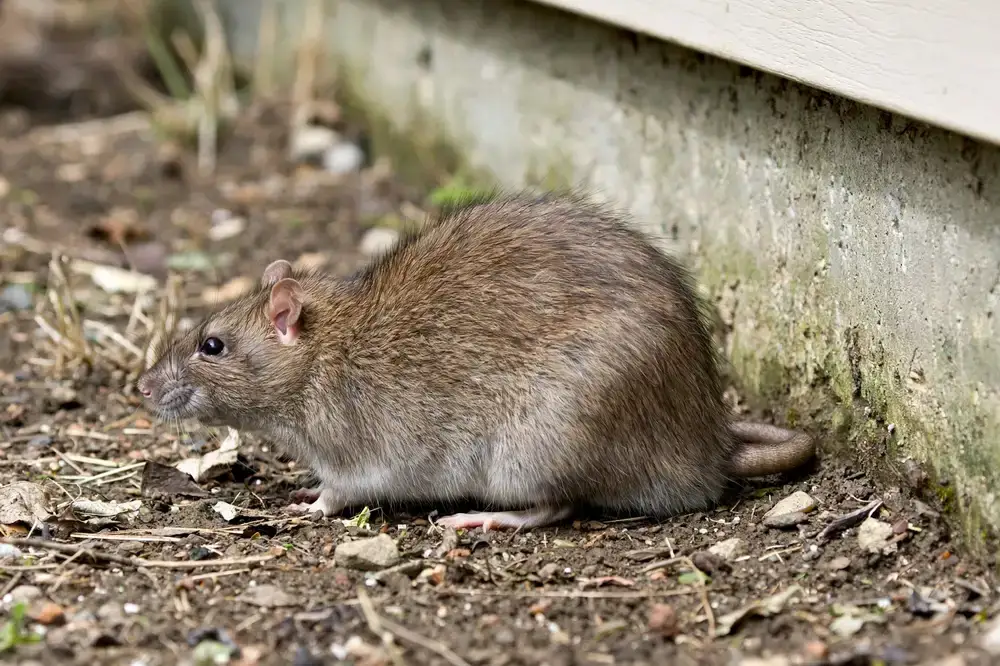
A Norway rat has a thick, stocky body, a blunt nose, and small ears compared to its head size. Its tail is shorter than its body — the clearest way to tell it apart from the slimmer roof rat.
Adult Norway rats run 7 to 10 inches long and can weigh up to a pound, making them noticeably heavier than any mouse or roof rat. Fur color ranges from brown to gray-brown on top, with a gray or white underside.
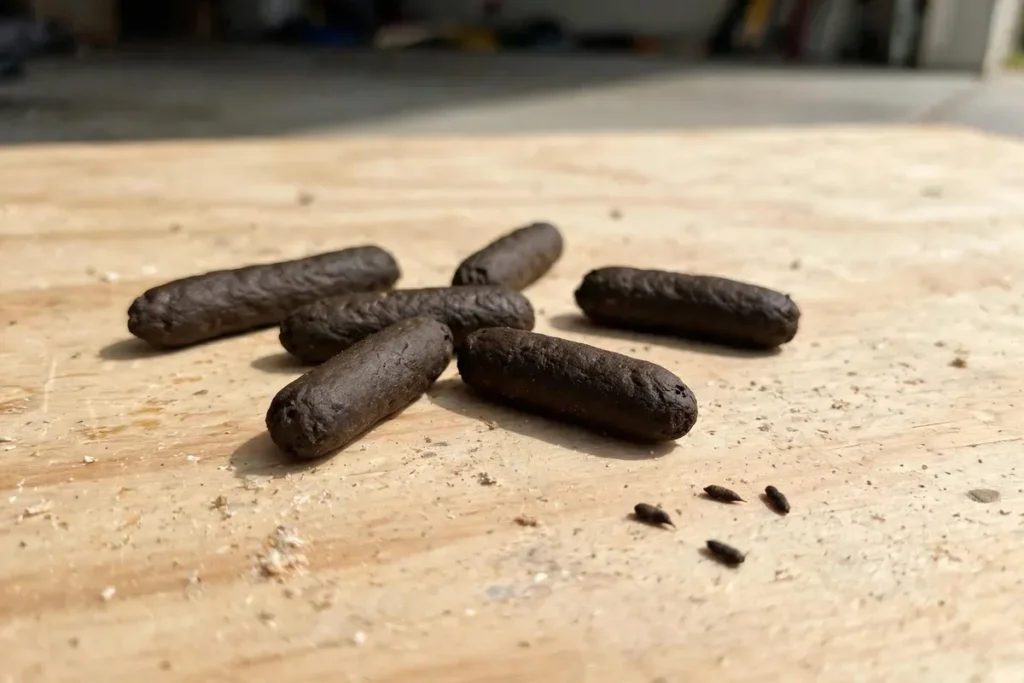
Droppings offer a quick clue too. Norway rat droppings are about three-quarters of an inch long with blunt, rounded ends — much larger than anything left by mice.
|
Feature |
Norway Rat |
Roof Rat |
|---|---|---|
|
Tail length |
Shorter than body |
Longer than body |
|
Body shape |
Thick, heavy |
Slender, lighter |
|
Nose |
Blunt |
Pointed |
|
Preferred level |
Ground, burrows |
Attics, rooflines |
|
Droppings |
¾ inch, blunt ends |
½ inch, banana-shaped |
|
Escape behavior |
Runs to ground cover |
Climbs upward |
Where Do Norway Rats Live in Granite Bay?
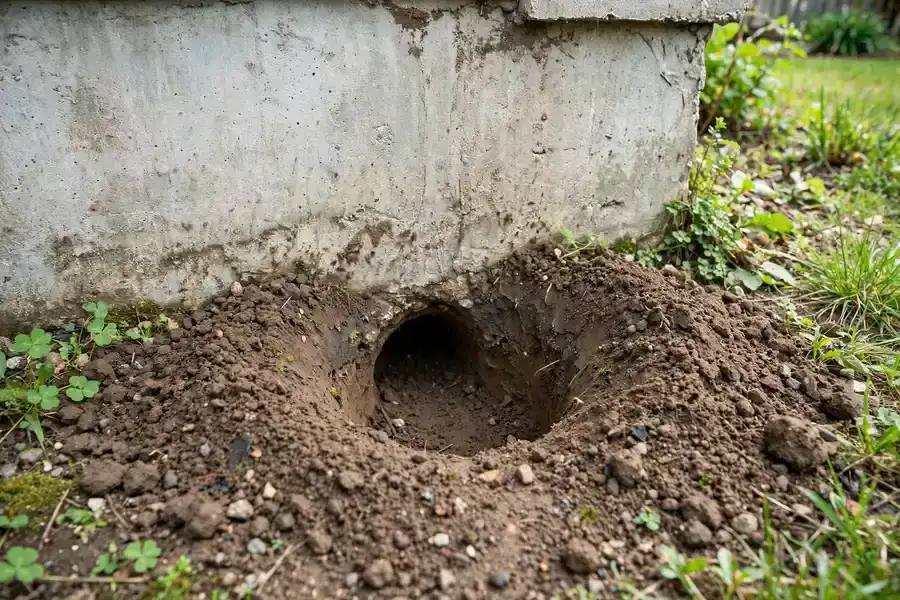
Norway rats burrow at ground level, close to a reliable water source. In Granite Bay, seasonal creeks, drainage channels, irrigated landscaping, and properties near Folsom Lake all support burrow activity.
Foundation perimeters are a top target. Norway rats dig 2 to 3 inch burrows under decks, along foundation walls, and beneath concrete slabs, often leaving a mound of loose soil at the entrance.
Outdoors, woodpiles, dense shrubs, and cluttered storage areas give Norway rats cover close to a structure. Yards with standing water from irrigation runoff or a backyard pond tend to see more burrow activity than dry, well-drained landscaping.
How Do Norway Rats Behave Through the Year?
Norway rats stay active year-round in Granite Bay, with breeding activity picking up in spring and fall as temperatures moderate. Warmer months bring more outdoor burrowing near irrigation lines and landscaping.
These rats are strong swimmers and excellent diggers, but poor climbers. When startled, a Norway rat retreats to ground cover instead of climbing, unlike a roof rat that heads upward.
Reproduction moves fast. A female Norway rat can produce up to 12 litters a year, with six to twelve pups each time, and can mate again within days of giving birth. That pace turns a single burrow into a larger colony quickly.
Pro Tip: Walk your foundation perimeter after any heavy irrigation cycle or rain. Fresh burrow holes with loose soil piled at the entrance are the clearest early sign of Norway rat activity.
What Health Risks Do Norway Rats Carry?
Norway rats shed Leptospira bacteria in their urine, and this bacteria can survive in wet soil and standing water for weeks. Contact with contaminated soil or water during yard work is the main exposure risk.
Salmonella is another concern, spread through droppings that contaminate food storage areas, garages, and outdoor structures. Bites are rare but can carry rat-bite fever in uncommon cases.
Important: Wear gloves for any yard work, gardening, or crawl space access near a confirmed Norway rat burrow. Avoid bare-hand contact with soil or standing water in these areas, especially after irrigation or rain.
What Damage Can Norway Rats Cause?
Norway rats have the strongest gnaw force of any rodent species found in Granite Bay. They can chew through wood, soft concrete, aluminum flashing, and plastic pipe.
Gnawed irrigation lines and plastic water pipes are a common outcome, sometimes causing slow leaks that go unnoticed for weeks. That hidden moisture can lead to mold and further structural decay near the foundation.
Burrowing itself creates problems too. Extensive tunnel systems under decks, patios, and foundation edges can undermine soil support over time, especially in yards with frequent irrigation.
How Can You Prevent a Norway Rat Infestation?
Sealing ground-level gaps stops most Norway rat problems early. Check foundation vents, utility penetrations, and garage door gaps, since a Norway rat can squeeze through an opening about the size of a half dollar.
Reducing standing water helps too. Fix leaking irrigation lines, improve drainage near the foundation, and avoid overwatering landscaping close to your home’s perimeter.
Keep woodpiles, dense shrubs, and storage clutter away from exterior walls. This removes the cover Norway rats need to burrow undetected close to a structure.
When Should You Call a Professional?
DIY bait stations sometimes reduce a small Norway rat problem near the yard’s edge. They rarely solve an established burrow system, since surviving rats often avoid bait after one encounter.
Call a professional if you notice fresh burrow holes near your foundation, hear thumping under the floor, or find gnawed irrigation lines. These signs usually point to an active colony rather than a single visitor.
Professional inspection maps every burrow entrance and identifies hidden entry points around the foundation. That approach solves the underlying problem instead of removing rats that new ones will simply replace.
Frequently Asked Questions
How do I tell a Norway rat from a roof rat?
Check the tail first. A Norway rat’s tail is shorter than its body, while a roof rat’s tail is longer than its body. Norway rats are also thicker, stay at ground level, and burrow, while roof rats are slimmer and climb into attics.
Are Norway rats dangerous to have around a Granite Bay property?
Norway rats can carry Leptospira bacteria in their urine, which can contaminate soil and standing water. Direct contact during yard work is the main risk, so gloves are a simple, effective precaution near confirmed burrow sites.
Why do I have burrow holes near my foundation?
Norway rats dig burrows close to water and shelter, and foundation perimeters offer both in Granite Bay yards with irrigation or nearby creeks. Loose soil mounded at a hole’s entrance is a clear sign of active burrowing.
Can Norway rats get inside my house?
Yes. Norway rats can enter through foundation gaps, utility penetrations, and garage gaps at ground level. Once inside, they tend to stay near the ground rather than climbing into attics or upper walls.
What attracts Norway rats to a Granite Bay yard?
Standing water, leaking irrigation lines, dense landscaping, and cluttered storage all attract Norway rats. Properties near creeks or Folsom Lake often see more pressure due to consistent water access nearby.
How fast do Norway rats reproduce?
A female Norway rat can produce up to 12 litters a year, with six to twelve pups per litter, and can mate again within days of giving birth. This reproduction rate can turn one burrow into a colony fast.
Can I fill in a Norway rat burrow myself?
Filling a burrow without sealing nearby entry points often leads rats to dig a new tunnel close by. A full inspection identifies every active burrow and the structural gaps allowing continued access.
Do Norway rats damage plumbing?
Yes. Norway rats have a strong gnaw force and can chew through plastic irrigation lines and water pipes. This sometimes causes slow leaks that go unnoticed until moisture damage appears nearby.
What time of year are Norway rats most active in Granite Bay?
Norway rats stay active year-round, with breeding activity rising in spring and fall as temperatures moderate. Warmer months also bring more outdoor burrowing near irrigated landscaping.
What is the fastest way to check for Norway rats?
Look for circular burrow holes with loose soil at the entrance near your foundation, large blunt-ended droppings, and gnaw marks on pipes or wood at ground level. Heavy thumping sounds under floors are another strong sign.
A Norway rat rarely stays confined to the yard once a burrow takes hold near your foundation. Oakline Rodent Solutions inspects Granite Bay properties to confirm Norway rat activity and seal the exact gaps allowing entry. Reach out today to schedule an inspection and protect your foundation before the damage spreads.