
How to Identify a House Mouse in Granite Bay Homes
A house mouse in Granite Bay rarely stays outside once it finds a food source. Droppings in the pantry, gnawed food packaging, and a musky smell signal an active problem. Spotting a house mouse in Granite Bay early stops a fast-growing colony.
Quick Answer: House mice are small, uniformly gray-tailed rodents that nest close to food and breed year-round indoors. Granite Bay kitchens, pantries, and garages give them steady shelter and food access. Oakline Rodent Solutions inspects homes across Granite Bay to confirm house mouse activity and find the nest before it grows. Schedule an inspection to stop a small problem from becoming a large one.
Call Now For Same Day Inspection
What Is a House Mouse?
The house mouse, Mus musculus, is the small rodent most likely to move into a Granite Bay kitchen. Adults reach 2.5 to 3.5 inches in body length, with a tail almost as long as the body. Their fur is dusty gray-brown on top and slightly lighter underneath, and the tail is a single uniform gray color. House mice stay close to food, water, and warmth, which makes pantries, cabinets, and garage storage ideal nesting sites.
Unlike roof rats, house mice do not need trees or high places to thrive. They live at ground level, travel along baseboards, and slip through gaps as small as a pencil width. A single female can produce several litters a year, so a few mice in a pantry can quickly become a colony hidden inside wall voids.
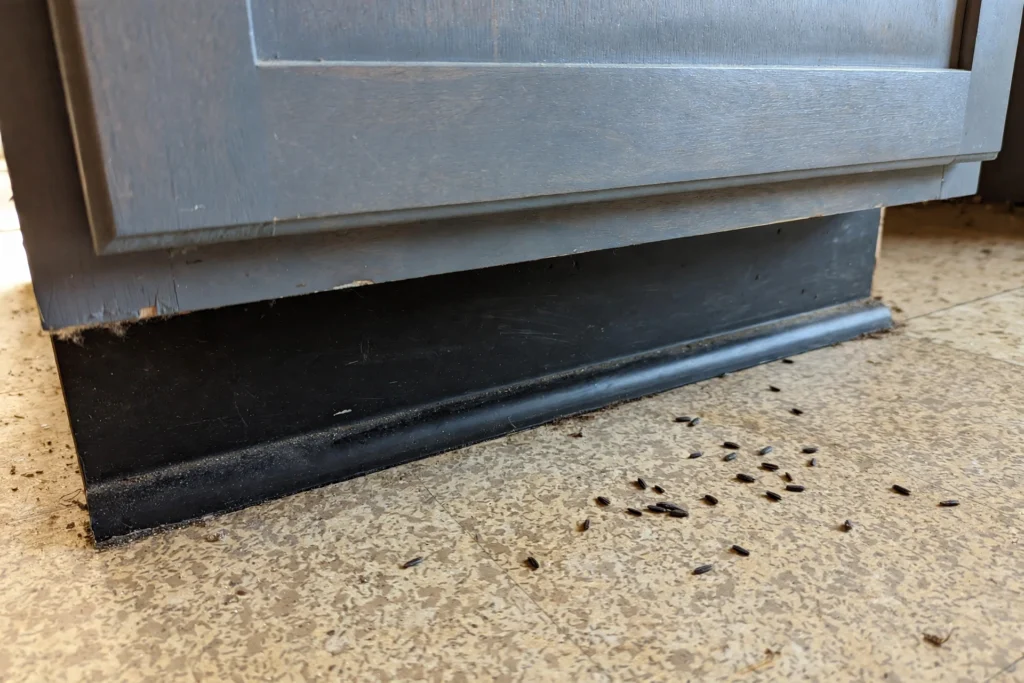
House mice are active mostly at night and leave small, rice-shaped droppings along cabinets, countertops, and inside drawers. They also gnaw food packaging, paper, and soft plastic to reach crumbs and nesting material. Because they reproduce quickly, early signs should not be ignored even when only one mouse is seen.
How Can You Identify a House Mouse?
A house mouse is easy to recognize once you know the details that set it apart from a deer mouse, whose tail is sharply two-toned. The house mouse has a uniformly gray tail from base to tip, gray or buff feet, and a belly only slightly lighter than its back. Its body is small and slim, its ears are rounded and prominent, and its droppings are tiny, pointed at the ends, and scattered along feeding routes.
At night, listen for light scratching inside walls or cabinets and look for gnaw marks on cereal boxes, pet food bags, and pantry corners. House mouse droppings are smaller than roof rat droppings and often appear in lines along baseboards or behind appliances. A musky smell near food storage is another strong sign of an active nest.
The easiest test is the tail. A deer mouse tail is dark on top and white underneath, while a house mouse tail looks the same gray all the way around. Feet tell the same story: white feet point to a deer mouse, and gray or buff feet point to a house mouse. If you find droppings and gnawing in the kitchen rather than the attic, a house mouse is the more likely culprit.
|
Feature |
House Mouse |
Deer Mouse |
|---|---|---|
|
Tail |
Uniformly gray |
Two-toned, white underside |
|
Belly |
Slightly lighter, not white |
Distinctly white |
|
Feet |
Gray or buff |
White |
|
Preferred level |
Kitchens, ground level |
Attics, garages, sheds |
|
Typical odor |
Musky smell at ground level |
Musky smell in attic spaces |
Where Do House Mice Live in Granite Bay?

In Granite Bay, house mice cluster where food and warmth stay constant all year. Kitchens and pantries offer crumbs, open cereal boxes, and pet food, while garages hold birdseed, stored boxes, and quiet corners for nesting. Wall voids near plumbing lines and warm appliances give them protected routes between food and shelter.
Granite Bay homes near open space, creeks, and oak woodland see more movement into garages during cooler months. Mice follow utility lines, garage door gaps, and foundation cracks into the house, then settle in the closest warm room with food. Stored holiday decorations, cardboard boxes, and clutter in garages make ideal hidden nesting material.
If you find droppings in a kitchen drawer but no activity in the attic, the nest is likely at ground level near that food source. Check behind the stove, under the sink, and inside lower cabinets first. Those are the routes and resting spots house mice use most often in Granite Bay homes.
How Do House Mice Behave Through the Year?
House mice do not follow a true hibernation cycle, so they stay active in Granite Bay homes through winter. When outdoor temperatures drop, they move indoors for warmth and steady food, often nesting behind ovens, water heaters, and stored boxes. In summer, they expand into garages and sheds where pet food and birdseed are easy to reach.
Breeding continues year-round indoors because food and shelter never disappear. A female can have several litters in a year, and young mice reach breeding age within weeks. That is why a small winter sighting can turn into a much larger spring population if the nest is not found.
Watch for seasonal changes in droppings and gnawing. Fresh droppings near food storage in winter suggest mice have moved inside, while new activity in a garage in summer points to a nest expanding outward. Regular checks in both seasons help catch a colony before it spreads through wall voids.
Pro Tip: Store dry goods like cereal, pet food, and birdseed in sealed hard-plastic or glass containers. Original cardboard and thin plastic packaging offers no real barrier against a house mouse.
What Health Risks Do House Mice Carry?
House mice can spread Salmonella through droppings and urine left on countertops, in cabinets, and on food packaging. They also carry lymphocytic choriomeningitis virus (LCMV), which spreads through contact with droppings, urine, or nesting material. Cleaning these areas without gloves or disinfectant increases the risk of exposure.
Dried droppings can break apart into dust during sweeping or vacuuming, and that dust can irritate airways for people with asthma or allergies. Children and pets face higher risk because they touch floors, low cabinets, and food bowls where mice travel. Any sign of droppings near food preparation areas should be treated as a health concern, not just a nuisance.
Important: Clean any surface where house mouse droppings appear with disinfectant before food preparation. Wear gloves when cleaning affected cabinets, drawers, or pantry shelves.
What Damage Can House Mice Cause?
House mice gnaw constantly to keep their teeth short, and that habit damages food packaging, paper, insulation, and soft plastic in storage areas. They tear open cereal boxes, pet food bags, and seed packets, then contaminate the remaining food with droppings and urine. In pantries, a small colony can ruin stored goods within weeks.
Wiring is a serious risk because mice chew through insulation on cables behind appliances, inside walls, and in garages. Damaged wiring can cause short circuits, appliance failures, and, in rare cases, fire risk. Mice also gnaw wood trim, plastic pipes, and rubber seals around doors and utility lines.
Nesting material adds to the damage. Mice shred paper, fabric, and insulation to build nests inside wall voids, stored boxes, and furniture. Over time, droppings, urine stains, and a strong musky odor build up in those areas, making cleanup and repair more difficult the longer the colony remains.
How Can You Prevent a House Mouse Infestation?
Start by sealing the gaps mice use to enter. Check garage door seals, utility line openings, vents, and gaps under exterior doors, and close them with steel wool, caulk, or metal flashing. Even a pencil-width opening is enough for a house mouse, so small gaps matter as much as large ones.
Remove food access by storing cereal, rice, pet food, and birdseed in sealed hard-plastic or glass containers. Clean crumbs from counters, floors, and pantry shelves each night, and keep trash in bins with tight-fitting lids. Without easy food, mice are far less likely to settle inside.
Reduce nesting spots by clearing clutter in garages, storage rooms, and closets. Replace cardboard boxes with sealed plastic bins, keep firewood away from the house, and trim shrubs that touch exterior walls. Regular checks of lower cabinets and garage corners help catch new activity early.
When Should You Call a Professional?
Call a professional if droppings keep appearing after cleaning, if gnawing spreads to new cabinets, or if you hear activity in walls at night. Those signs point to an established nest rather than a single visitor. A professional inspection can locate the nest, trace entry points, and confirm whether the problem is a house mouse or another species.
Professional help is also important when droppings appear near food, baby items, or pet bowls, or when anyone in the home has asthma or allergies. Safe cleanup, trapping, and sealing reduce health risks and prevent repeat infestations. DIY traps alone often miss the nest and the gaps that let mice return.
Oakline Rodent Solutions inspects Granite Bay homes to find the nest and seal the entry points feeding it. An inspection is the fastest way to stop a small sighting from becoming a large colony, especially when activity appears in kitchens, pantries, or garages.
Frequently Asked Questions
How can you tell a house mouse from a deer mouse?
Check the tail, belly, and feet. A house mouse has a uniformly gray tail, a belly only slightly lighter than its back, and gray or buff feet. A deer mouse has a two-toned tail, a distinctly white belly, and white feet.
Are house mice dangerous to people?
Yes, because they contaminate food and surfaces with droppings and urine. They can spread Salmonella and LCMV, and dried droppings can irritate airways. Clean affected areas with disinfectant and wear gloves.
Where do house mice nest inside a home?
Most nests are close to food at ground level. Common spots include kitchen cabinets, pantries, wall voids near plumbing, garages, and stored boxes. Attic nests are more typical of roof rats than house mice.
How fast can house mice multiply?
Very fast. A female can produce several litters a year, and young mice reach breeding age within weeks. That is why a small sighting can become a colony quickly if the nest is not found.
What smells or sounds signal house mice?
A musky smell near food storage, light scratching inside walls at night, and gnaw marks on packaging all point to house mice. Small, rice-shaped droppings along baseboards and inside drawers are another clear sign.
Do house mice leave the house in summer?
Some expand into garages and sheds in summer, but indoor colonies usually stay because food and shelter remain constant. Do not assume the problem has ended just because activity moves outdoors.
What should you do if you find droppings in the pantry?
Throw away contaminated food, clean shelves with disinfectant, and wear gloves. Store remaining dry goods in sealed hard-plastic or glass containers, then check for entry gaps and nesting areas nearby.
Can house mice fit through small gaps?
Yes. They can slip through gaps as small as a pencil width. Seal garage door gaps, utility openings, vents, and gaps under doors with steel wool, caulk, or metal flashing.
Do traps alone solve a house mouse problem?
Traps can catch individual mice, but they often miss the nest and the entry points. Without sealing gaps and removing food access, new mice keep arriving and the colony returns.
When should you call Oakline Rodent Solutions?
Call when droppings keep appearing, gnawing spreads, or activity continues at night. Oakline Rodent Solutions inspects Granite Bay homes to locate the nest and seal the entry points feeding it.
A house mouse rarely stays a single visitor once it finds food inside your home. Oakline Rodent Solutions inspects Granite Bay kitchens, pantries, and garages to locate the nest and seal the entry points feeding it. Reach out today to schedule an inspection before a small sighting turns into a larger colony.