
The Six Steps, Explained
Phone Consultation
Day 0 — The Day You Call
On-Site Inspection
Day 1 — Same-Week Scheduling
Trapping Phase
Days 1–14
Entry Point Sealing
After 72 Hours With No Activity
Attic Cleanup
HEPA-Filtered, Sanitized
Final Report & 90-Day Guarantee
Your Protection Starts Here
1. Phone Consultation — We Learn Your Problem Before We Arrive

Every job starts with a short call. We ask simple questions. What do the noises sound like? When do you hear them? Scratching at night near the eaves usually points to roof rats. Quick scurrying near the kitchen often means house mice.
We also ask about your home. Granite Bay has a lot of two-story homes with big roof lines and mature oak trees. Oak branches touching the roof are one of the most common rat entry points we find. We’ll ask if any trees touch your roofline, how old your home is, and whether it’s been vacant.
By the end of the call, we already have a good idea of what we’re dealing with. That means we show up with the right tools, not a guess.
Many of our Granite Bay clients are busy professionals or own second properties nearby in Folsom, Roseville, or El Dorado Hills. We can collect gate codes, photos, and access details over text before we ever arrive.
2. On-Site Inspection — A Full Roofline Check, Not a Quick Walk-Around
This step is where we separate ourselves from most local pest companies. We inspect the roofline directly, using a ladder, because most rodent entry points sit above eye level. A ground-level walk around your yard misses the majority of active entry points on a typical Granite Bay home.
Our inspection covers:
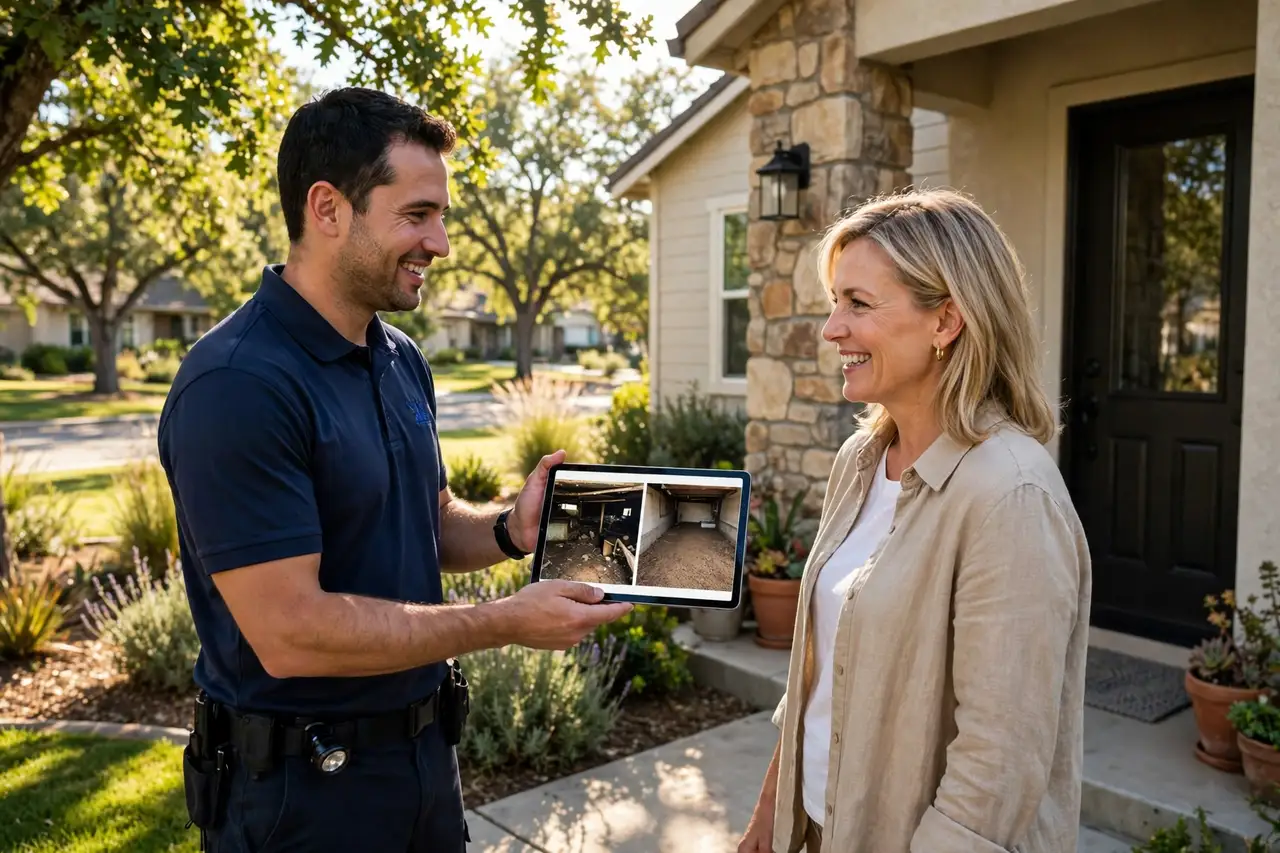
Every entry point gets photographed and rated: confirmed active, likely, or worth monitoring. You get a written report the same day, with photos attached. If you’re managing the property remotely, you’ll see everything without needing to be on-site.
Inspection cost: $150–$300, depending on your home’s size and roof access. This fee is credited in full toward any exclusion work you approve.
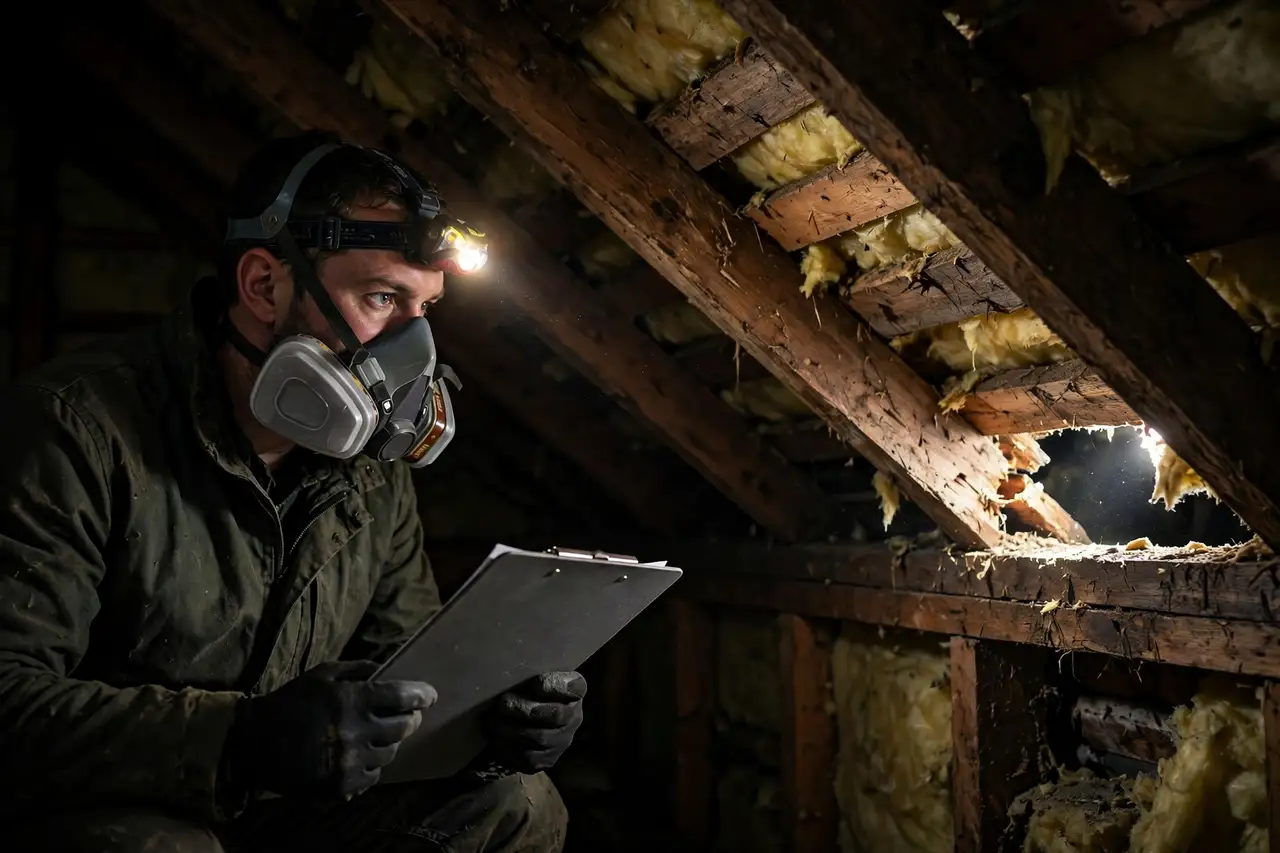
3. Trapping Phase — No Poison, No Guessing
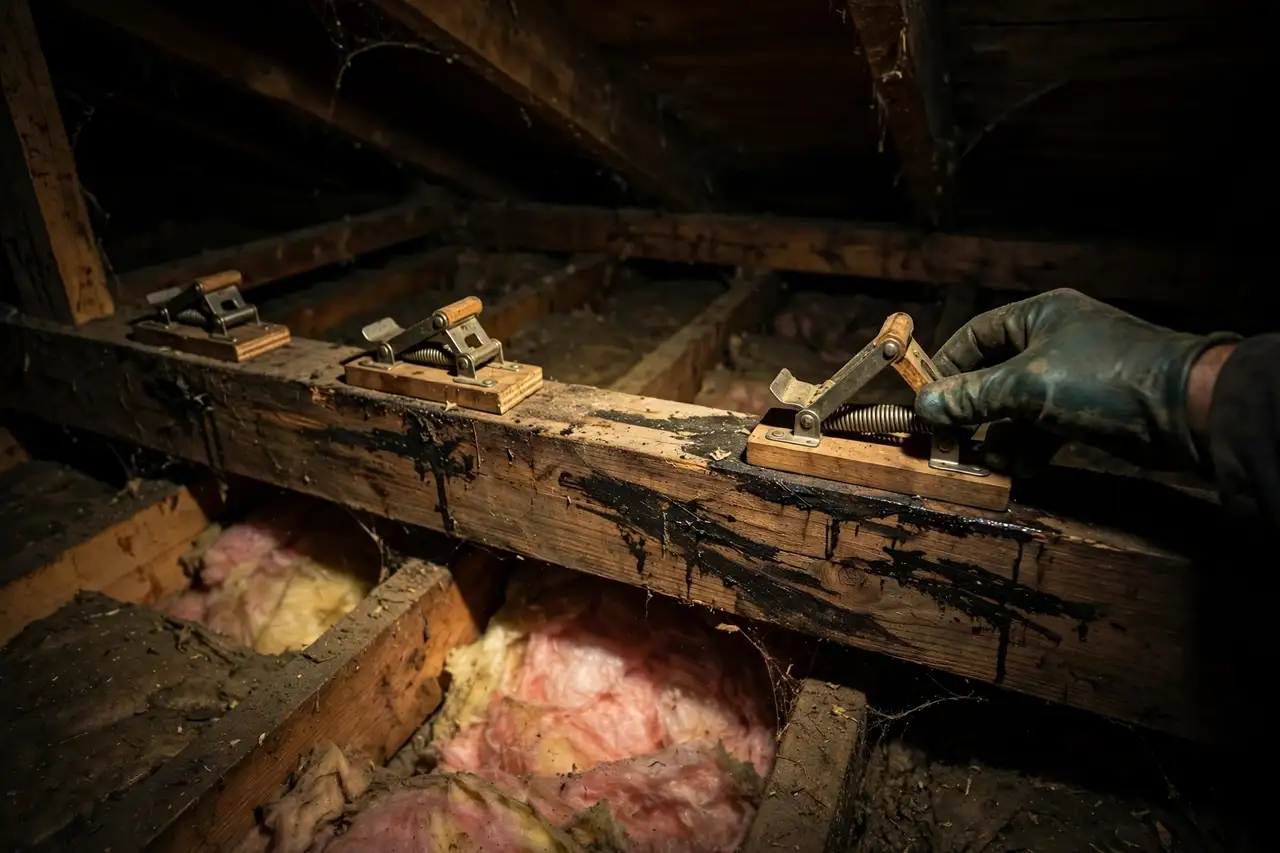
Once we know where rodents are entering and moving, we place traps directly along their travel paths. We look for grease marks along beams and rafters. These dark smudges show us exactly where animals are running each night. Placing traps here works far better than scattering them randomly through the attic.
We do not use rodenticide at any stage of the process. Here’s why that matters in Granite Bay’s climate: a poisoned rodent that dies inside a wall or attic space decomposes fast in our hot summers. The smell can show up within a day or two and last for weeks. Mechanical trapping means we remove the animal the same day it’s caught, with no guesswork about where the smell is coming from.
We keep trapping until we hit 72 hours with zero catches. That’s our signal that the interior population is clear. We don’t seal a single entry point before reaching that mark, because sealing too early traps animals inside. Trapped rodents chew through drywall trying to escape, and that creates a much bigger problem than the one you started with.
4. Entry Point Sealing — Built for Granite Bay’s Heat and Sun
Once trapping confirms your home is clear, we seal every confirmed and likely entry point. We use heavy-gauge stainless steel mesh, not plastic or foam. Foam breaks down fast in direct sun and doesn’t hold up to a rodent’s teeth. Standard mesh can rust or warp after a few seasons of Placer County heat.
For homes with oak trees near the roofline, we also recommend trimming any branch within a few feet of the structure. Branches touching the roof give rodents a direct bridge into your attic, no matter how well the entry points are sealed.
Every sealed point gets photographed before and after installation. Your final report includes every photo, organized so you can check the work yourself.
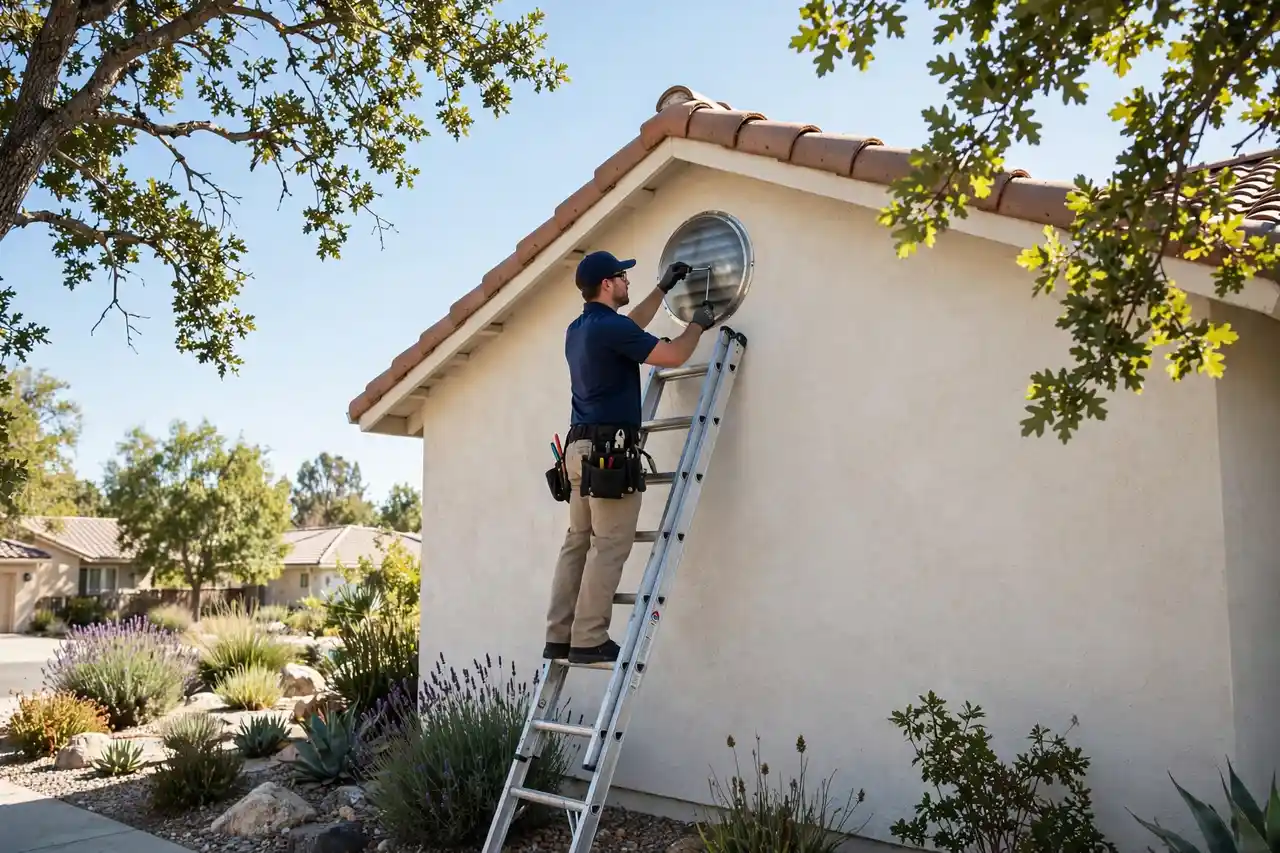
5. Attic Cleanup — Sanitized and Safe
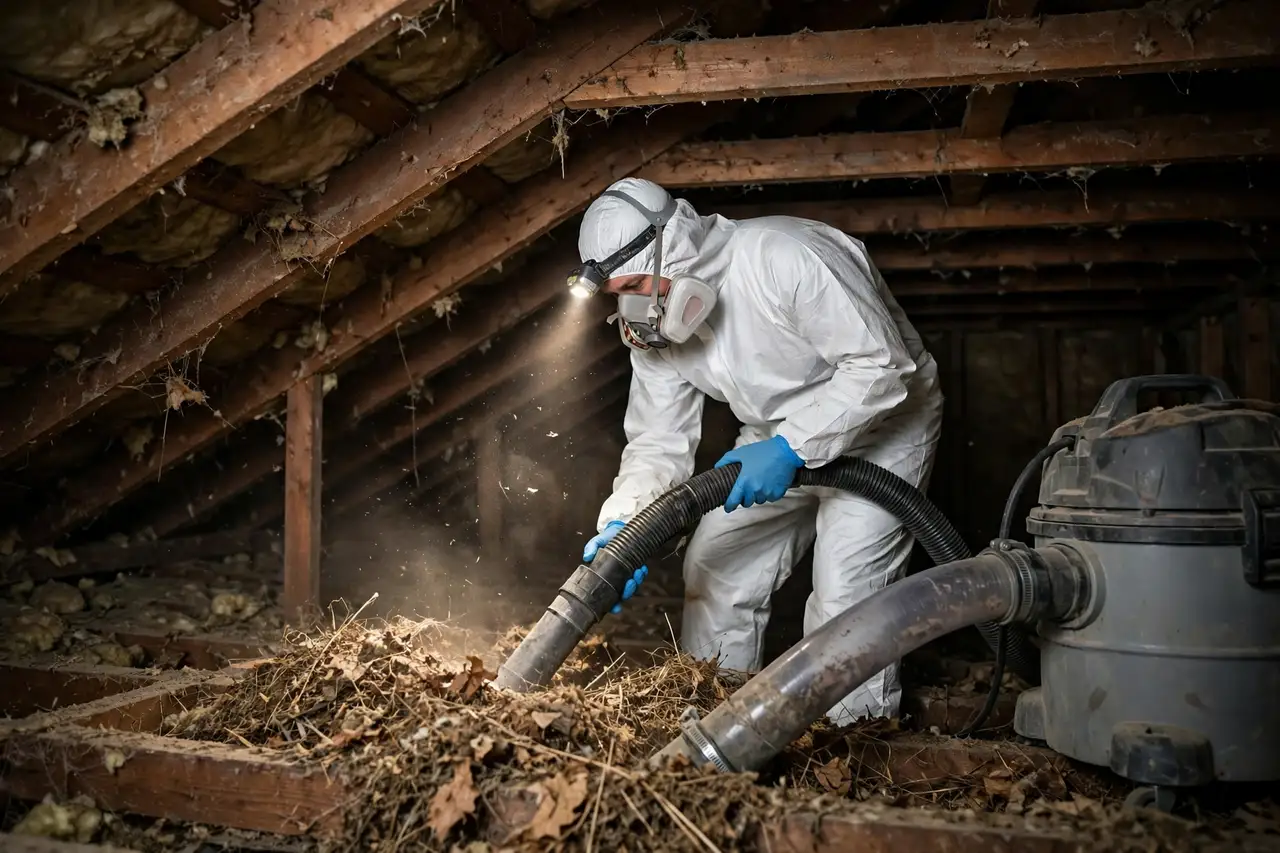
Rodent droppings can carry bacteria and, in some cases, hantavirus. Cleaning an attic without the right protection isn’t safe, and it isn’t something we recommend doing yourself.
Here’s our cleanup process:
A sealed attic that still smells like “home” to rodents can attract new activity down the road. The deodorizing step is what actually breaks that cycle.
6. Final Report & 90-Day Guarantee — A Clear Finish Line
Every job ends with a written report and a 90-day guarantee. Your report includes before-and-after photos of every sealed entry point, a count of animals removed, attic condition notes, and any wiring damage we found along the way.
If rodents get back in through any point we sealed within 90 days, we come back and fix it at no cost. No fine print, no exceptions.
For Granite Bay homeowners renting out a property, this report also works well as documentation for insurance or short-term rental platforms.
We recommend a follow-up inspection every spring. Granite Bay’s dry summers and occasional heavy winter rains can shift roof materials over time, so a yearly check keeps small gaps from becoming new entry points.
What Happens When a Step Gets Skipped
Skip the phone consultation → Wrong tools, wrong focus. Arriving without knowing whether you’re dealing with roof rats or house mice means wasted time figuring it out on-site instead of solving the problem.
Skip the roofline inspection → Most entry points get missed. A ground-level walk-around simply can’t see what’s happening at eave height, where most Granite Bay rodent activity starts.
Skip proper trapping → Animals get sealed inside. Sealing before confirming the attic is clear traps rodents inside your walls. That leads to chewed drywall and a much bigger repair down the line.
Use cheap materials → Repeat repairs every year. Foam and low-grade mesh don’t hold up to sun exposure and rodent teeth. Stainless steel mesh is worth the upfront cost because it lasts.
Skip the attic cleanup → New rodents move in. Leftover scent trails tell new rodents the space is already “claimed” territory. That’s often why homeowners see repeat activity after a partial fix.
Skip the final report → No proof of the work. Without documentation, there’s nothing to show an insurance company, a buyer, or a rental platform if a question comes up later.
Our Process vs. Monthly Pest Plans
Many pest companies in the Sacramento and Placer County area sell ongoing monthly plans. These plans manage the problem but rarely solve it, because sealing entry points either isn’t included or isn’t done thoroughly.
Monthly Subscription Plans
Our Process
Frequently Asked Questions
How long does the whole process take?
Most Granite Bay homes go from first call to final close-out in about two to three weeks, depending on how quickly trapping confirms a zero-catch period.
Do I need to be home during the process?
No. We coordinate access by text or phone and send you photos at every stage, which works well for homeowners managing rental properties nearby.
Why wait for 72 hours of zero catches before sealing?
Sealing too early risks trapping an animal inside your walls. Waiting for a confirmed 72-hour window means we’re only sealing an empty space.
What if rodents come back after the work is done?
Any point we sealed is covered under our 90-day guarantee. We’ll come back and fix it at no charge.
Is this safe for homes with kids or pets?
Yes. We don’t use poison at any point in the process, which means no risk of secondary exposure to children or pets in the home.
Ready to Get Started?
If you’re dealing with scratching in the attic, droppings near the garage, or gnaw marks on wiring, don’t wait for the problem to grow. Our team offers thorough Rodent Control in Granite Bay built around a clear, documented process — not an open-ended subscription. Call for a free estimate and same-week scheduling across Granite Bay and the surrounding Placer County area.